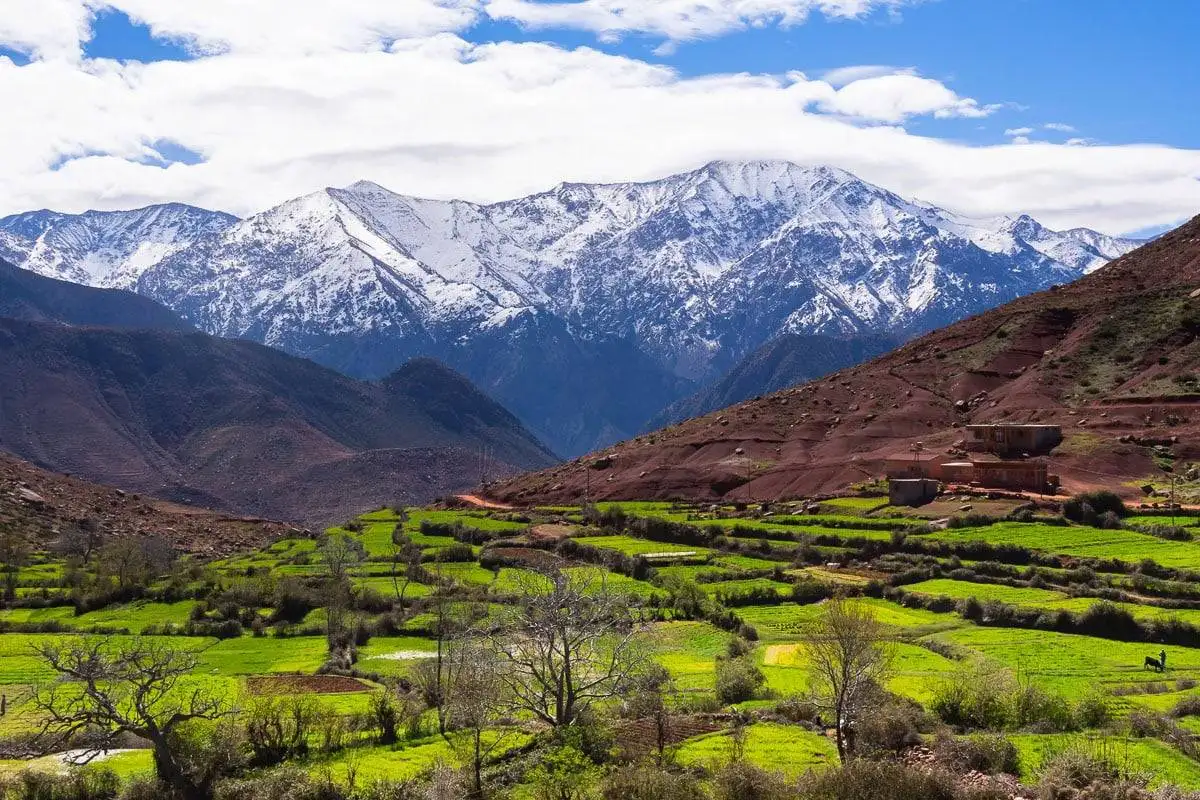
Pack for a Morocco desert tour as a journey through changing elevations and temperatures, not as a single hot afternoon in the dunes. The useful kit is light, layered, dust-tolerant, and easy to move into a small camp bag.
Bring breathable daytime layers, a warm evening layer, a sun hat, sunglasses, high-SPF sunscreen, closed walking shoes, sandals for camp, a scarf or buff, a refillable bottle, personal medication, a power bank, and a compact overnight bag. Leave rigid suitcases and valuables in the tour vehicle or hotel when the camp transfer requires it, following your operator's instructions.
Morocco Desert Tour Packing List: Quick Version
This list works for the common two- to four-day routes from Marrakech or Fes to Zagora, Merzouga, Erg Chebbi, Dades, and Ouarzazate. Longer itineraries need more laundry planning, not a much heavier suitcase.
| Category | Essential items | Why they matter |
|---|---|---|
| Clothing | Breathable tops, loose trousers, light long sleeves, warm mid-layer, sleepwear | Sun coverage by day and warmth after sunset |
| Footwear | Closed walking shoes, socks, easy camp sandals | Uneven ground, hot sand, cold mornings, and camp paths |
| Sun and dust | Brimmed hat, sunglasses, sunscreen, scarf or buff, lip balm | Strong reflected light, wind, dry air, and blowing sand |
| Health | Medication, basic first aid, sanitizer, tissues, oral rehydration sachets | Distance from pharmacies and dry conditions |
| Camp | Small overnight bag, headlamp, toiletries, reusable bottle, warm socks | Simpler luggage transfer and movement after dark |
| Electronics | Phone, charging cable, power bank, camera protection | Charging may be limited and sand reaches small openings |
| Documents | Passport copy, insurance details, booking contacts, some cash | Useful when connectivity or card acceptance is limited |
A Sahara tour can cross the High Atlas, high plateaus, gorges, valleys, and desert margins. Temperatures at a mountain pass, inside an air-conditioned vehicle, and at camp after sunset can feel completely different on the same day.
What to Wear in the Sahara Desert in Morocco
The most comfortable desert clothing balances airflow, sun coverage, modesty, and layers. Lightweight long sleeves and loose trousers protect more reliably than repeatedly applying sunscreen to exposed shoulders and legs. Natural or technical fabrics that dry quickly are useful when the itinerary changes hotels every night.
Daytime layers
- Two or three breathable T-shirts or loose shirts for a short tour
- One lightweight long-sleeve shirt for direct sun and wind
- Loose trousers or long travel pants with secure pockets
- Modest shorts only when appropriate for the setting and activity
- Underwear and socks that dry overnight
Very tight clothing traps heat and becomes uncomfortable during long drives. Pure white garments show dust quickly, while very dark heavy fabrics can absorb heat. Mid-tone, breathable pieces are practical. Clothing should also suit village stops, family-run accommodations, and religious or cultural sites elsewhere on the route.
Evening and cold-weather layers
Desert nights are not always warm. Pack a fleece, knit layer, or light insulated jacket even when Marrakech feels hot at departure. In winter, add a warmer jacket, thermal base layer, hat, and gloves. Camps normally provide bedding, but the walk to dinner, stargazing, and sunrise can still be cold.
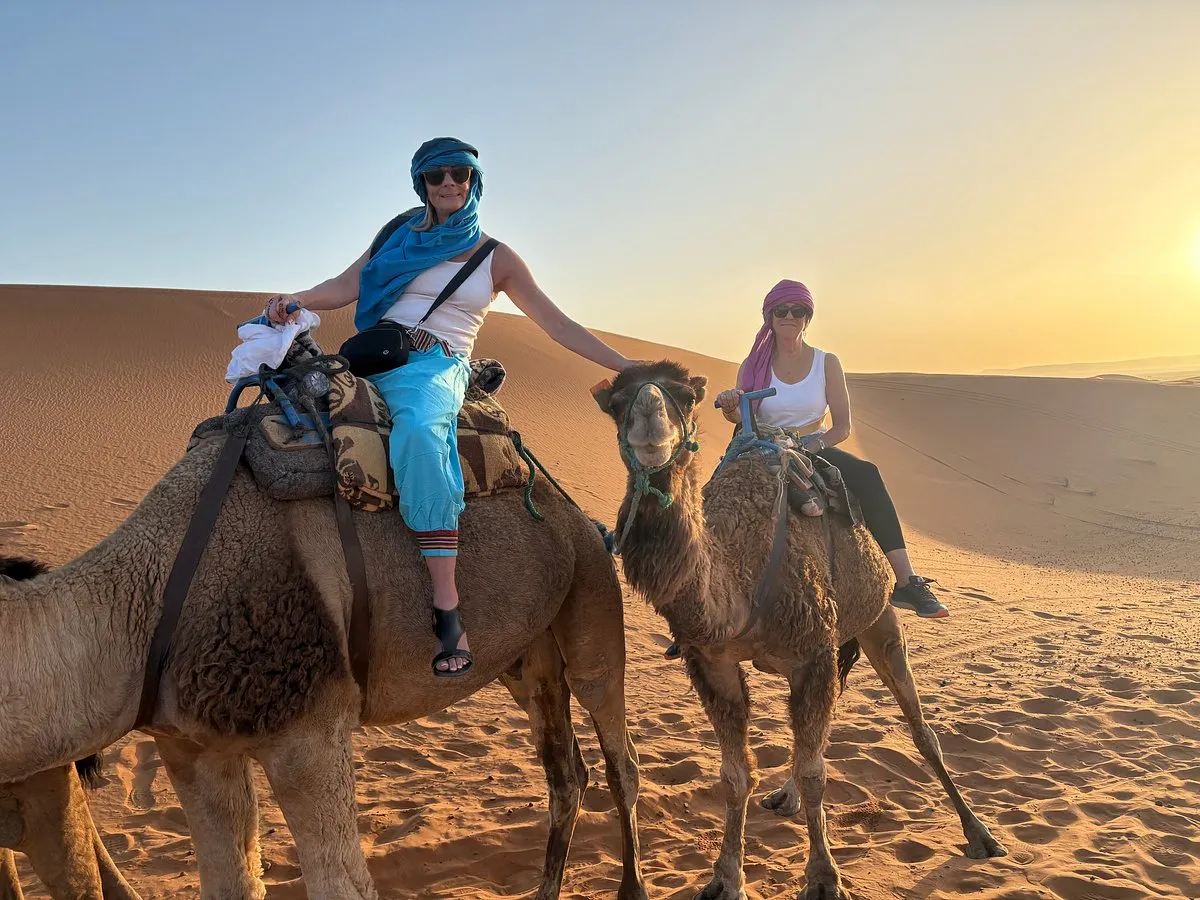
A scarf, buff, or cheche
A large scarf is one of the most useful items in a Morocco desert tour packing list. It can shade the neck, cover the mouth and nose during blowing sand, add warmth, or protect a camera while moving between stops. Ask a guide to show a secure wrap rather than tying it where loose fabric can catch.
Best Footwear and Bags for a Desert Tour
Closed walking shoes
Choose broken-in trainers, trail shoes, or lightweight walking shoes with grip. The route can include stone paths, kasbah steps, dry riverbeds, compacted camp tracks, and roadside viewpoints. Heavy mountaineering boots are unnecessary for most standard tours, but thin fashion sandals do not protect feet on hot, rough, or thorny ground.
Sandals for camp
Pack simple sandals or slip-on shoes for moving between the tent, dining area, and bathroom. Sand cools quickly after sunset, so keep socks nearby. Do not walk barefoot around camp where stones, insects, or sharp plant material may be difficult to see.
Use a small overnight bag
Many camps are reached by camel, 4x4, or both. A compact soft bag or daypack is easier to transfer than a rigid rolling suitcase. Put sleepwear, medication, toiletries, warm layers, chargers, and next-day clothing inside. Confirm whether the main luggage stays in the vehicle, at a desert hotel, or travels separately to camp.
A dry bag or zip pouch protects passports, phones, and charging cables from dust. Use smaller pouches inside the overnight bag rather than unpacking everything onto the tent floor.
Sun, Dust, Hydration, and Health
Strong sunlight and dry air can dehydrate travelers before they feel thirsty. Carry a refillable bottle and drink steadily through the day. Your operator may provide bottled water, but ask what is included and how refills work. Avoid creating unnecessary plastic waste when safe refill options are available.
Sun protection
- Broad-spectrum, high-SPF sunscreen in a leak-proof container
- UV-protective sunglasses that fit securely
- A brimmed hat or cap with neck coverage
- SPF lip balm and unscented moisturizer
- Long sleeves for the strongest afternoon sun
Apply sunscreen before the camel or 4x4 transfer, when washing hands may be less convenient. Remember ears, the back of the neck, hands, and exposed ankles. Wind can make the air feel cooler without reducing ultraviolet exposure.
Medication and basic first aid
Carry prescription medication in its original packaging and keep essential doses in the day bag, not deep inside the main suitcase. Add blister treatment, any familiar motion-sickness remedy, pain relief you normally use, sanitizer, tissues, and oral rehydration sachets. Consult a qualified health professional for personal medical advice and check official travel guidance before departure.
Contact lenses and dust
Glasses are often more comfortable during wind or blowing sand. Contact-lens wearers should bring lubricating drops, clean hands before handling lenses, and carry spare glasses. Keep camera-lens changes to a minimum outdoors because fine sand can reach sensors and mechanisms.
Sahara Camp Essentials and Electronics
Camp facilities vary from simple shared-bathroom tents to private en-suite tents with electricity. Luxury is not a universal technical standard. Before packing, confirm the bathroom arrangement, bedding, towels, heating or cooling, charging points, Wi-Fi expectations, and how far the tent is from the dining area.
Useful items after dark
- Headlamp or small torch, even when camp paths are lit
- Warm socks and an accessible jacket
- Compact toiletries and personal hygiene supplies
- Reusable water bottle beside the bed
- Earplugs and an eye mask for light sleepers
- A small amount of cash for tips or local purchases
Power and camera care
Charge devices before leaving the last hotel and carry a reliable power bank. Keep the power bank in hand luggage when flying and follow the airline's battery rules. Download reservations, maps, translation tools, and emergency contacts for offline use.
Store the camera in a closed bag during windy transfers. A soft brush or air blower is safer than wiping gritty dust across a lens. Avoid changing lenses in open sand, and let cold equipment warm gradually before exposing it to humid air elsewhere on the trip.

Seasonal Sahara Packing Guide
Read the best time to visit Morocco guide before treating any packing list as fixed. Weather varies by elevation, year, and route, and forecasts become more useful close to departure.
| Season | Add to the core list | Main concern |
|---|---|---|
| Winter | Warm jacket, thermal layer, beanie, gloves, warm sleepwear | Cold nights, early mornings, and mountain crossings |
| Spring | Wind layer, scarf, allergy supplies if personally needed | Variable temperatures and occasional wind or dust |
| Summer | Extra sun protection, electrolytes, very light long layers | Extreme daytime heat and reduced comfort during exposed activities |
| Autumn | Light fleece, rain shell for wider routes | Warm days with progressively cooler evenings |
In the hottest months, the right itinerary may matter more than any piece of clothing. Ask about departure times, shaded stops, air conditioning, camp cooling, and whether desert activities move to early morning or late afternoon. Travelers sensitive to heat should consider another season.
What Not to Pack for a Morocco Desert Tour
- Do not take the full rigid suitcase into camp unless the operator confirms it is appropriate
- Do not bring brand-new shoes that have never been worn
- Do not rely on one heavy coat instead of adaptable layers
- Do not carry expensive jewelry or unnecessary valuables
- Do not pack loose glitter, confetti, balloons, or anything that becomes litter
- Do not bring a drone without checking current Moroccan import and operating rules
- Do not assume every camp has strong Wi-Fi, unlimited charging, or climate control
- Do not overfill the day bag; lifting and walking become harder on uneven ground
Large luggage can still travel on a private tour. The point is to separate the items needed for one camp night from the main case. Label both bags and keep medication, documents, money, and electronics with you.
Final Checklist Before Leaving for the Sahara
- Check the current forecast for every major overnight, not only Marrakech
- Confirm whether the trip reaches Zagora, Merzouga, Erg Chebbi, or another desert area
- Ask how luggage reaches camp and what bag size is practical
- Verify tent bathroom, bedding, towel, power, and temperature arrangements
- Charge the phone, camera, and power bank
- Download booking details and emergency contacts
- Move medication and the warm layer into the small overnight bag
- Fill water before the final transfer
- Keep a scarf, sunglasses, sunscreen, and lip balm accessible
Route length changes what you need. Compare the Marrakech desert tour guide with the Fes to Marrakech desert route guide. Specific itineraries such as the four-day Marrakech to Merzouga tour and three-day Fes to Merzouga and Marrakech tour show the overnight sequence.
For different camp standards, family needs, or a slower route, review the custom Morocco tour page or send the details through the trip-planning form.
Sources and Editorial Checks
This guide was prepared from Morocco Happiness Tours' published routes and checked against the authoritative sources below on . Entry rules, transport schedules, weather, and public guidance can change; verify them again for your travel date.