A Fes to Marrakech desert tour is one of Morocco's most efficient one-way journeys: it connects two imperial cities while crossing the Middle Atlas, Erg Chebbi, Todra Gorges, the Dades Valley, Ait Ben Haddou, and the High Atlas. The real decision is how many days to give it.
Choose 3 days when time is fixed and you accept three long travel days. Choose 4 days for a full Merzouga-area day plus both a hotel near the dunes and a desert-camp night. Choose 5 days for the same deeper desert experience with an additional stage through Skoura, Ouarzazate, Ait Ben Haddou, and Telouet before Marrakech.
Fes to Marrakech: 3, 4, and 5 Days Compared
All three published routes travel in the same general direction, but they do not simply add empty nights. Each additional day changes where the journey slows down and which region receives meaningful time.
| Decision point | 3 days | 4 days | 5 days |
|---|---|---|---|
| Pace | Fastest; long travel each day | Balanced desert focus | Most distributed road time |
| Merzouga nights | One camp night | One hotel night plus one camp night | One hotel night plus one camp night |
| Merzouga area day | No full regional day | Yes | Yes |
| Dades overnight | Yes | Yes | Yes |
| Ouarzazate region overnight | No | No | Yes, near Ait Ben Haddou |
| Final-day depth | Ait Ben Haddou and High Atlas | Ait Ben Haddou and High Atlas | Ait Ben Haddou, Telouet, and High Atlas |
| Best fit | Time-limited adults comfortable with road travel | Most first-time desert travelers | Travelers who value pace, kasbahs, and photography |
See the complete published itineraries for the 3-day Fes to Marrakech tour, 4-day route through Merzouga, and 5-day desert and kasbah journey.
Choose 3 Days When the Calendar Is Fixed
The three-day route is the shortest practical crossing offered here. Day 1 leaves Fes for Ifrane, the cedar region near Azrou, Midelt, the Ziz landscapes, and Merzouga. The camel trek and desert camp happen that same evening. Day 2 leaves the dunes for Tinghir, Todra Gorges, and Dades. Day 3 continues through the Valley of Roses, Ouarzazate area, Ait Ben Haddou, and the High Atlas to Marrakech.
That structure is efficient because every overnight advances the trip. It is also demanding. There is no full day around Merzouga, and delays on the first day can compress the camel departure. Travelers should be ready for early starts, changing landscapes viewed from the road, and less freedom to linger.
The 3-day route works best when:
- You need to travel from Fes to Marrakech anyway.
- Erg Chebbi, one camp night, Todra, and Ait Ben Haddou are the priorities.
- Your group is comfortable with three substantial road days.
- You can leave Fes on time and have no fixed Marrakech event on arrival evening.
- You are not trying to add Chefchaouen, a second desert night, or a detailed Ouarzazate visit.
It is not three full sightseeing days at each destination. The value comes from crossing Morocco through the desert route instead of taking the direct Fes–Marrakech road or train.
Why 4 Days Is the Most Balanced Desert Option
The fourth day is placed where it changes the experience most: Merzouga. Day 1 reaches a hotel near Erg Chebbi rather than immediately transferring to camp. Day 2 is available for the Merzouga area, with opportunities such as Rissani, local music and culture, or a desert-region visit before the afternoon camel trek and camp night.
After sunrise, Day 3 continues to Todra and Dades. Day 4 follows the Valley of Roses and kasbah road through Ait Ben Haddou and the High Atlas to Marrakech. This keeps the strong one-way logic while removing the feeling that the dunes are only an overnight checkpoint.
Choose four days if:
- The Sahara is one of the main reasons for your Morocco trip.
- You want both a hotel near the dunes and a camp experience.
- You want time around Merzouga beyond the camel trek.
- You prefer not to arrive from Fes and leave the desert the next morning.
- You still need to reach Marrakech without adding a separate Ouarzazate overnight.
For many first-time travelers, this is the best balance between route depth and total trip length. It also gives the driver more room to adapt the first two days around seasonal daylight and comfort stops.
What the Fifth Day Adds
The five-day route keeps the full Merzouga day from the four-day itinerary, then gives the western side of the journey its own stage. After Todra and Dades, Day 4 continues through the Valley of Roses and Skoura toward Ouarzazate, with an overnight near Ait Ben Haddou. Day 5 visits Ait Ben Haddou, follows the route toward Telouet, crosses the High Atlas, and ends in Marrakech.
This matters because the stretch between Dades and Marrakech contains several destinations that are often compressed into one long day. Separating them creates more useful daylight for earthen architecture, oasis landscapes, film-country panoramas, and mountain stops. UNESCO identifies Ait Ben Haddou as a significant example of southern Moroccan earthen architecture; a slower schedule makes it easier to walk through the ksar instead of treating it as a quick photo stop.
The fifth day is valuable for:
- Photography and landscape-focused travelers.
- Families or groups who need more breaks.
- Travelers interested in kasbah architecture and Ouarzazate.
- Anyone who dislikes combining Dades, Ait Ben Haddou, the Atlas crossing, and Marrakech arrival into one extended day.
- Visitors who want a more relaxed final arrival in Marrakech.
If you have five available days but care only about the dunes, another option is adding a second flexible desert night instead. That is a custom route decision rather than a universal upgrade.
What the Fes-to-Marrakech Journey Feels Like
Fes to the Middle Atlas
The first hours climb away from Fes through changing elevation and greener landscapes. Ifrane and the cedar area near Azrou create a sharp contrast with the medina. Wildlife may be seen, but it is not guaranteed and should not be fed for a photograph.
Middle Atlas to the Ziz Valley
The road continues through Midelt and broad plateau scenery before descending toward palm valleys and drier terrain. This is a long transfer, but the environmental transition is part of the route's appeal. Keep a layer in the vehicle because altitude and air conditioning can feel cool even when Merzouga is warm.
Erg Chebbi and the camp transfer
Near Merzouga, large luggage normally remains with the vehicle or at the hotel while a smaller bag goes to camp. Camel and 4x4 arrangements vary by camp and traveler needs. Sunset is weather-dependent, and a responsible plan does not promise a particular color or cloudless sky.
Todra, Dades, and the kasbah road
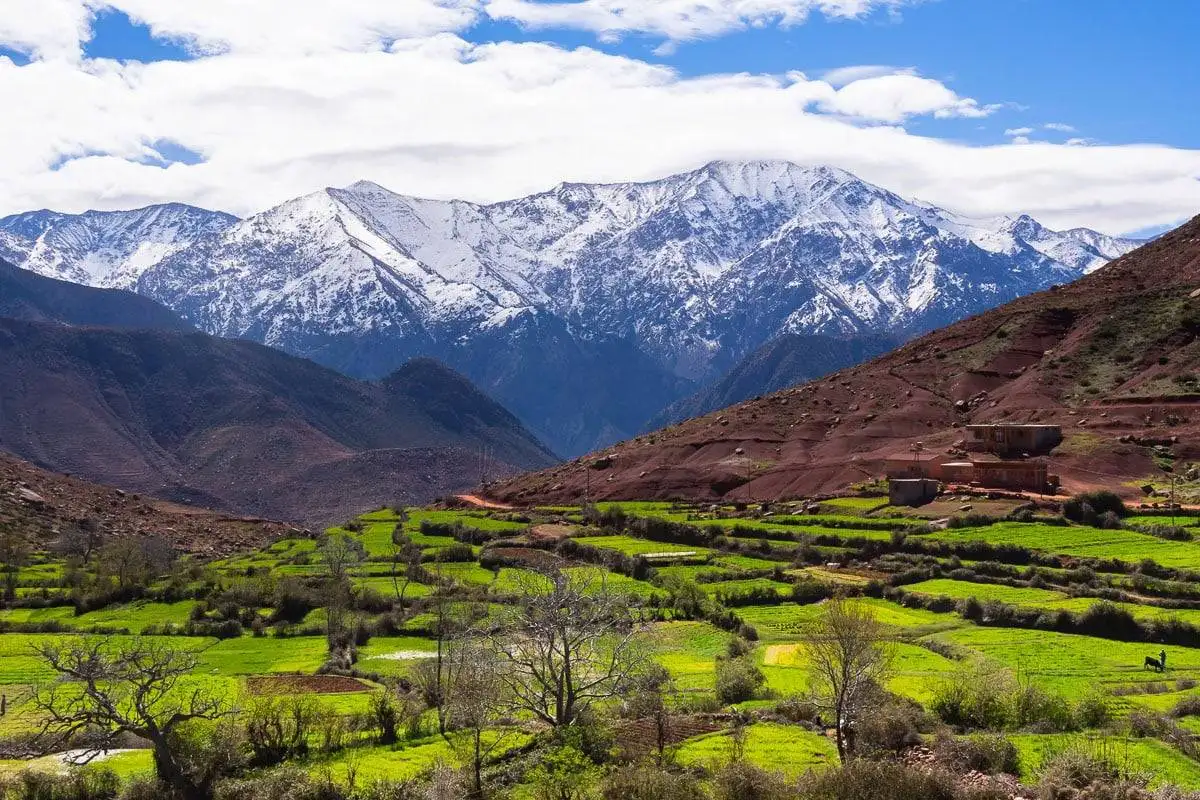
West of the desert, palm areas and canyon walls lead into the Dades landscapes. The route then follows valleys, Skoura, Ouarzazate, and Ait Ben Haddou before climbing the High Atlas. These are not filler stops; they explain how the desert edge connects to Marrakech through historic settlement and trade landscapes.
Arrival in Marrakech
Arrival time is an estimate, not an appointment. Mountain conditions, traffic, meals, and visits all matter. Avoid prepaying a tightly timed evening activity on the final day. Give the driver the exact riad or hotel name because some medina accommodations require a separate walking or porter transfer.
Desert Camp, Luggage, and Comfort Planning
“Desert camp included” does not describe every practical detail. Before booking, confirm the camp category and the exact tent arrangement offered to your group. Ask whether bathrooms are private or shared, whether towels and bedding are supplied, how heating or cooling works, and which meals are included.
- Small overnight bag for camp
- Warm layer for sunset and early morning
- Closed shoes or secure sandals
- Sun protection and personal medication
- Power bank and protected camera storage
- Confirmed camel or 4x4 transfer option
- Written bathroom and room configuration
- Dietary needs shared in advance
Families should provide children's ages, child-seat requirements, and preferred sleeping arrangement before the quote. Travelers with back, knee, balance, or mobility concerns can ask about a 4x4 camp transfer rather than assuming a camel ride is mandatory.
Season also matters. Read the best time to visit Morocco guide for heat, winter nights, mountain weather, and region-by-region packing advice.
Questions to Ask Before Booking
- What is the actual pickup time? Day 1 timing affects the desert arrival and camel transfer.
- Which nights are hotel, riad, or camp? The 3-day and 4-day routes have different Merzouga patterns.
- How long are the direct drives? Ask separately about stops and total day length.
- What does the price include? Confirm meals, accommodation, guides, entrance fees, camp, camel trek, fuel, and drop-off.
- Which camp category is quoted? Get bathroom and bedding arrangements in writing.
- Where is the Marrakech drop-off? Riad access may require a walking transfer.
- Can the route change for weather? Mountain and desert conditions sometimes require timing adjustments.
Browse all private tours from Fes for northern and desert alternatives. For a different number of days or a second desert night, request a custom Morocco itinerary.
Sources and Editorial Checks
This guide was prepared from Morocco Happiness Tours' published routes and checked against the authoritative sources below on . Entry rules, transport schedules, weather, and public guidance can change; verify them again for your travel date.