The best time to visit Morocco depends less on one national forecast and more on the route you plan. Atlantic cities, inland imperial cities, the Atlas Mountains, and the Sahara can feel like different destinations on the same day.
For a route combining Marrakech or Fes with the Sahara, spring and autumn usually offer the easiest balance of daytime comfort and manageable nights. Winter can be excellent for cities and the desert if you pack warm layers. Summer works best when the coast, mountains, early starts, and heat-aware pacing are central to the plan.
Best Months for Morocco at a Glance
There is no single month that is perfect everywhere. A traveler spending a week between Fes, Merzouga, and Marrakech has different priorities from someone planning Essaouira, Casablanca, and Rabat. The useful question is: best time for which route?
| Travel goal | Usually the easiest periods | What to consider |
|---|---|---|
| Imperial cities | Spring and autumn; winter for cooler sightseeing | Summer afternoons can be demanding in inland medinas. |
| Sahara and Erg Chebbi | Spring and autumn; selected winter dates | Nights can be cold in winter and daytime heat can be intense in summer. |
| Atlas Mountains | Late spring through autumn for many road trips | Elevation changes conditions quickly; winter weather can affect high passes. |
| Atlantic coast | Much of the year, especially summer for cooler air | Wind and ocean influence make the coast feel different from inland cities. |
| Country-wide circuit | March to May and September to November | These periods generally make it easier to combine cities, valleys, mountains, and desert. |
The Moroccan National Tourist Office describes the country as a meeting point of Atlantic, Mediterranean, mountain, inland, and Saharan climates. That contrast is why broad statements such as “Morocco is hot” are not enough for planning.
Morocco Season by Season
Spring: balanced conditions for a varied route
Spring is often the simplest answer for first-time visitors who want several landscapes in one itinerary. Days are generally more comfortable for walking in Marrakech and Fes, roadside valleys can be green, and the Sahara is usually easier to enjoy than during peak summer heat. It is still important to carry layers: a warm city afternoon does not predict the temperature after sunset at a desert camp or on a mountain pass.
Spring can also be busy around popular holidays and school breaks. Reserve preferred riads, desert camps, and private vehicles early when your dates are fixed. If your priority is a Marrakech desert tour, compare the drive and overnight pattern before deciding whether a short Zagora route or a longer Merzouga journey fits.
Summer: design the itinerary around heat
Summer does not make Morocco impossible, but it changes the shape of a good day. Inland cities and the southeast can become very hot. Plan medina visits early, protect the middle of the day, keep water accessible, and avoid stacking long walks after a major drive. A private itinerary is useful because departure times and stops can be adjusted more easily than on a rigid group schedule.
The Atlantic coast can be a valuable counterweight. Essaouira often feels cooler and windier than Marrakech, making a private Essaouira day trip or an overnight coastal stop attractive. Mountain valleys may also offer a different rhythm, although sun exposure remains important at elevation.
Autumn: strong for desert and city combinations
Autumn is another broadly useful period for routes that cross the Atlas and continue to the Sahara. The most intense summer heat generally eases, while daylight remains useful for sightseeing and road stops. Conditions can still vary sharply between September and late November, so pack for the exact month rather than the season name alone.
If you want an imperial-city and desert circuit, autumn supports routes from all three gateways. Browse tours from Casablanca for country-wide itineraries, tours from Fes for eastbound desert crossings, or tours from Marrakech for High Atlas and southern routes.
Winter: cooler cities, cold nights, dramatic contrast
Winter can be rewarding for city exploration and the desert, especially for travelers who prefer cooler daytime conditions. The tradeoff is a larger temperature swing. Desert nights can be cold, riad courtyards may feel cool, and snow or winter weather can affect mountain roads. A jacket, warm sleepwear, and closed shoes are practical even when the afternoon forecast looks mild.
Check Marrakech, the highest road pass on your route, the overnight desert location, and the next destination separately. The coldest stop often determines what you need to pack.
How the Climate Changes by Region
Marrakech and inland plains
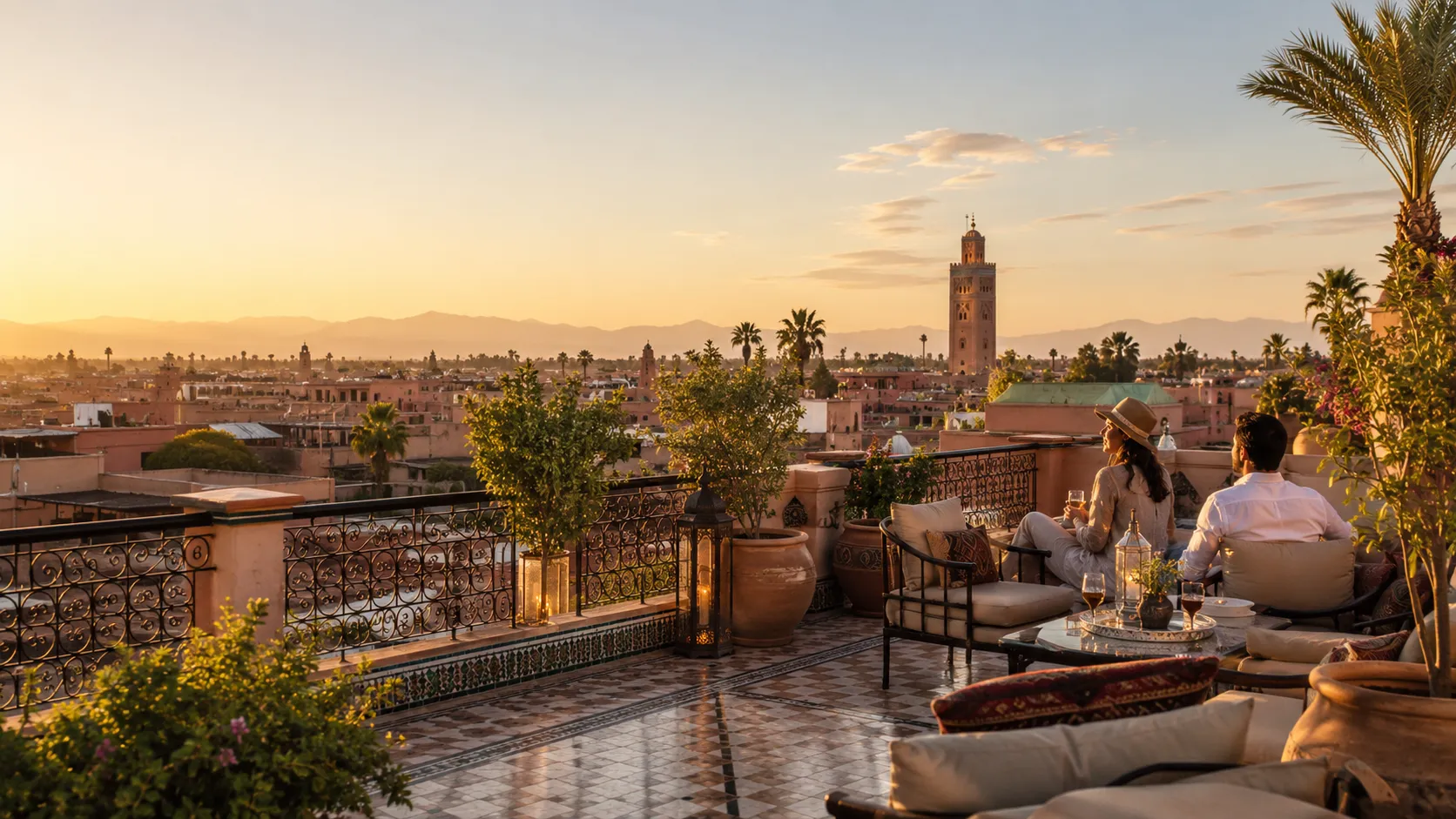
Marrakech has a more continental feel than the Atlantic coast. Spring and autumn make long walking days easier, winter mornings and evenings can be cool, and summer plans benefit from early starts. If you are using the city as a base, combine medina time with a private day trip rather than trying to cover every environment in one exhausting day.
Fes and northern imperial cities
Fes rewards slow exploration because its medina is dense, detailed, and largely pedestrian. Cooler months can be comfortable for walking, while rain is more likely in the north than travelers expecting only desert landscapes may assume. A light waterproof layer and shoes with grip are useful seasonal additions. UNESCO recognizes the Medina of Fez for its historic urban fabric; allow enough time to understand it rather than treating it as a brief photo stop.
High and Middle Atlas Mountains
Elevation matters. A sunny departure in Marrakech does not guarantee identical conditions on the Tizi n'Tichka road, and a warm Fes morning can become a cooler Middle Atlas stop near Ifrane or the cedar forest. Winter disruptions are not constant, but they are possible. Keep the route flexible and listen to current local road advice.
Merzouga, Zagora, and the southeast
The Sahara edge is known for large day-to-night changes. Spring and autumn are popular because they often balance daytime exploration with tolerable nights. Summer requires a deliberately heat-aware schedule. Winter visitors should confirm camp bedding, tent category, bathroom arrangement, and how warm layers will travel with them during the camel transfer.
Casablanca, Rabat, and Essaouira
Atlantic influence moderates coastal conditions and brings wind and moisture that may surprise travelers arriving from Marrakech. The coast can be a smart summer component, but it is not guaranteed beach weather every day. Carry a light outer layer even when inland forecasts are hot.
Month-by-Month Morocco Planning
January and February
These months suit travelers who value cooler sightseeing and fewer heat concerns. Prepare for cold desert nights, cool riads, rain in northern areas, and possible mountain weather. Build some flexibility around high passes and do not assume a heated vehicle means every accommodation or camp space will feel equally warm.
March and April
Spring conditions make multi-region itineraries appealing. Valleys may look greener and walking is often more comfortable than in summer. Demand can rise around Easter and other holiday periods, so secure high-priority accommodation and desert camp categories early.
May
May can combine long daylight with generally useful road-trip conditions, but heat begins building toward summer, especially in the south. Earlier departures become increasingly valuable. Sun protection should already be part of the daily plan.
June, July, and August
Expect heat to shape inland and desert days. Prioritize the coast, mountain settings, shaded cultural visits, and realistic rest. If the Sahara is essential, discuss whether the route, vehicle, camp, and activity timing are suitable for your group. Families with young children and travelers sensitive to heat should be especially conservative.
September and October
September begins the transition away from peak summer conditions, while October is widely chosen for desert and city combinations. Popular dates can book early. Pack breathable daytime clothing but keep a layer ready for evenings and altitude.
November and December
Days become shorter and nights cooler. These months can still work very well for a private circuit if the schedule respects daylight and seasonal temperatures. Confirm arrival times rather than relying on a summer itinerary pace, and carry rain protection for northern and coastal stops.
Choose Your Dates by Trip Style
For a first Morocco circuit
Choose spring or autumn when possible. A seven-day route can connect Casablanca, Rabat, Fes, Merzouga, the Dades Valley, Ait Ben Haddou, and Marrakech, but it moves quickly. Read the 7-day Morocco itinerary guide before deciding whether to add Chefchaouen, Essaouira, or extra desert time.
For the Sahara as the main event
Prioritize spring and autumn, or consider winter with proper layers. Avoid choosing only by price: ask about total drive time, number of desert nights, camp location, bedding, private bathrooms, and whether the itinerary reaches Erg Chebbi. A short route and a deep desert route are not interchangeable.
For culture and medinas
Winter, spring, and autumn are often easiest for long walking days. Schedule a local guide where the medina is complex, particularly in Fes. Leave unstructured time for craft quarters, food, and small discoveries rather than filling every hour with monuments.
For families
Base the season on the most sensitive traveler. Avoid extreme heat, reduce single-day drive length, confirm child seats in advance, and include rest. A private custom Morocco tour can distribute road time more comfortably than forcing children into an adult-paced itinerary.
Seasonal Packing List
- Breathable, modest daytime layers
- A warm layer for desert, mountain, and winter evenings
- Comfortable closed walking shoes
- Sun hat, sunglasses, and high-protection sunscreen
- Reusable water bottle and personal medication
- Light rain shell for northern, coastal, or winter travel
- Small overnight bag for a desert camp transfer
- Power bank and charging adapters
Do not pack only for the warmest forecast. The most useful Morocco wardrobe is layered: one outfit can adapt to sun, shade, wind, elevation, and a cooler evening without requiring a full luggage change.
What to Confirm Before You Book
- Route and elevation: identify the mountain passes and overnight locations, not only the departure city.
- Daily road time: ask how many hours are driving and how many are visits, meals, and walks.
- Accommodation conditions: confirm heating, cooling, camp bedding, and bathroom arrangements where these matter to you.
- Religious and public calendars: Ramadan and holidays move or vary; opening hours and meal patterns can change, so verify dates close to travel.
- Current conditions: recheck weather, road advice, entry rules, and travel guidance shortly before departure.
Once the season fits, the next decision is pace. Explore all private Morocco tours, or send your dates through the trip-planning form for a route built around your priorities.
Sources and Editorial Checks
This guide was prepared from Morocco Happiness Tours' published routes and checked against the authoritative sources below on . Entry rules, transport schedules, weather, and public guidance can change; verify them again for your travel date.