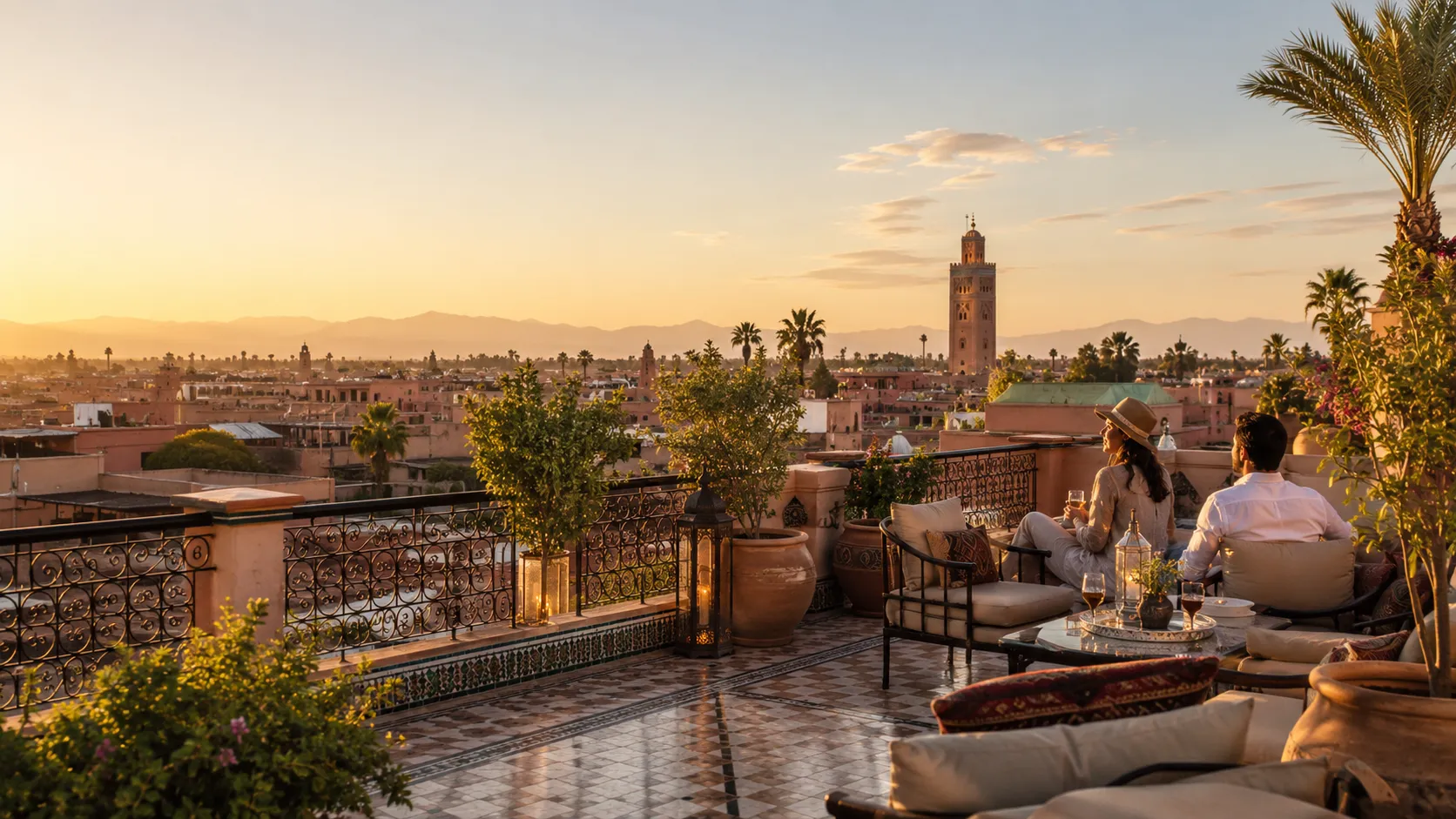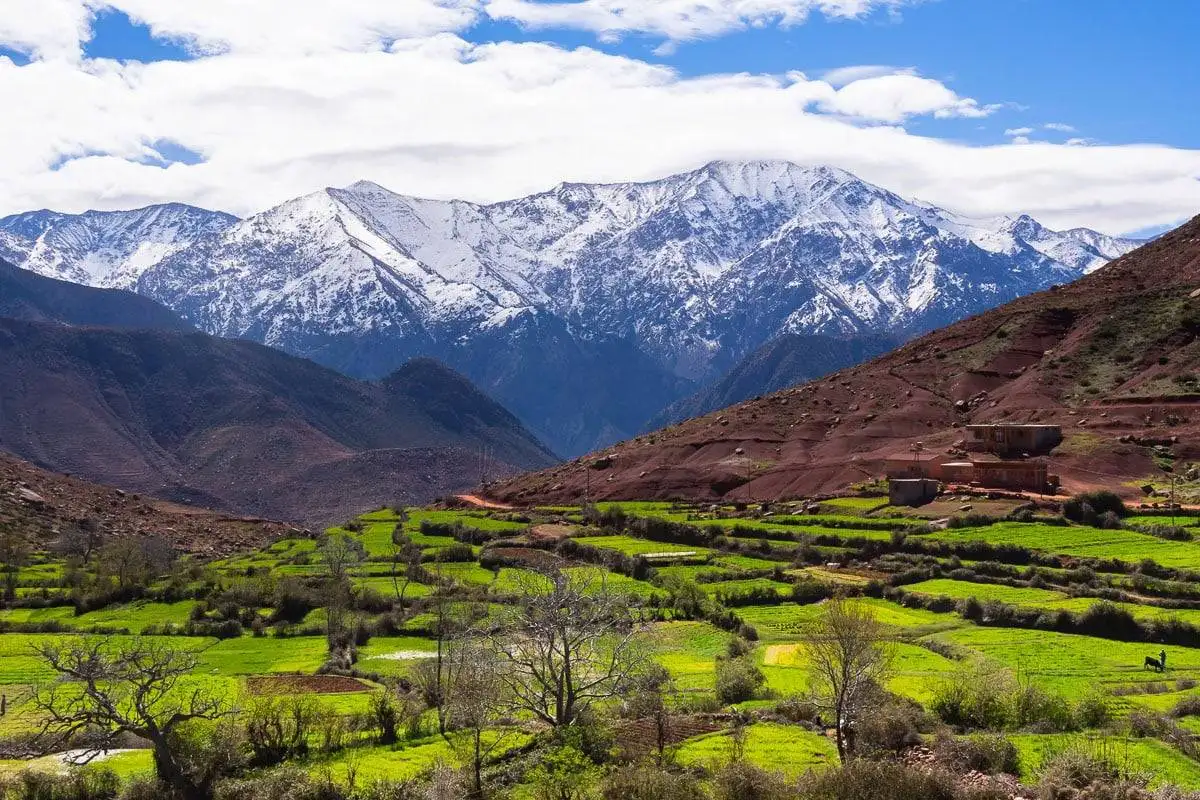
Ten days is enough to connect Morocco's imperial cities, the Rif Mountains, Erg Chebbi, kasbah country, and Marrakech, but only when the route moves in one direction and treats the long transfer days honestly.
For a first journey, begin in Casablanca, continue to Rabat and Chefchaouen, spend two nights in Fes, cross the Middle Atlas to Merzouga, sleep two nights around the Sahara, then travel through Todra, Dades, Ait Ben Haddou, and the High Atlas to finish in Marrakech. This plan uses nine hotel or camp nights and avoids returning over the same long roads.
Morocco 10 Day Itinerary at a Glance
This route works best as an open-jaw journey: arrive through Casablanca and leave from Marrakech, or reverse it. A return flight from Casablanca can still work, but the final day needs to include the Marrakech-to-Casablanca transfer or an additional airport night.
| Day | Route | Main experience | Overnight |
|---|---|---|---|
| 1 | Casablanca to Rabat | Arrival, Hassan II Mosque exterior or guided visit when available, Atlantic coast, Rabat | Rabat |
| 2 | Rabat to Chefchaouen | Kasbah of the Udayas, Rif Mountain drive, blue medina | Chefchaouen |
| 3 | Chefchaouen to Fes | Slow morning, optional Volubilis and Meknes stop | Fes |
| 4 | Fes | Guided medina, craft quarters, historic schools and gates | Fes |
| 5 | Fes to Merzouga | Middle Atlas, cedar country, Ziz Valley, Sahara arrival | Merzouga |
| 6 | Merzouga and Erg Chebbi | Desert villages, dune time, camel or 4x4 transfer, camp | Desert camp |
| 7 | Merzouga to Dades Valley | Todra Gorge, oasis landscapes, valley road | Dades Valley |
| 8 | Dades to Ait Ben Haddou | Rose Valley, Ouarzazate, fortified ksar | Ait Ben Haddou or Ouarzazate |
| 9 | Ait Ben Haddou to Marrakech | High Atlas crossing and Marrakech evening | Marrakech |
| 10 | Marrakech | Guided city visit or departure, depending on flight time | Departure |
The route keeps moving south and west. It combines the longest road days with worthwhile landscape stops, then finishes with a slower urban day rather than adding another cross-country return.
Day-by-Day 10 Day Morocco Route
Day 1: Casablanca arrival and Rabat
Use the first day to absorb flight delays and recover from travel. If arrival time allows, visit the Hassan II Mosque area and Casablanca's Atlantic frontage before continuing to Rabat. Do not promise yourself a complete Casablanca city tour after a late afternoon landing. A private airport pickup makes this day easier because the start time can follow the actual flight.
Rabat is a calm first overnight. The capital combines the Kasbah of the Udayas, Hassan Tower, the Mausoleum of Mohammed V, modern boulevards, and Atlantic light without the immediate intensity of a large medina. Travelers arriving late can skip sightseeing and begin fresh the next morning.
Day 2: Rabat to Chefchaouen
See the essential Rabat monuments early, then travel north into the Rif Mountains. Chefchaouen is more rewarding when you reach it before late evening. Settle into a riad inside or close to the medina and use the remaining daylight for Plaza Uta el-Hammam, the kasbah area, Ras El Maa, and the blue lanes beyond the busiest photography corners.
The city is compact, but stairs and sloped alleys matter when choosing luggage and accommodation. A driver may not be able to reach a medina door. Confirm the meeting point and porter arrangement before arrival.
Day 3: Chefchaouen, Volubilis, and Fes
Keep the morning for Chefchaouen. Leaving at dawn only to collect blue-alley photographs defeats the value of sleeping there. After breakfast, travel toward Fes. Volubilis and Meknes can fit on this day when the group starts on time and accepts a later arrival in Fes. Travelers who care deeply about Roman history should allow a guided visit rather than a rushed roadside stop.
If your priority is a relaxed Fes evening, skip one of the intermediate visits. The companion guide comparing a Chefchaouen trip from Fes or Casablanca explains why the blue city usually works better as an overnight than as a very long out-and-back day.
Day 4: Full day in Fes
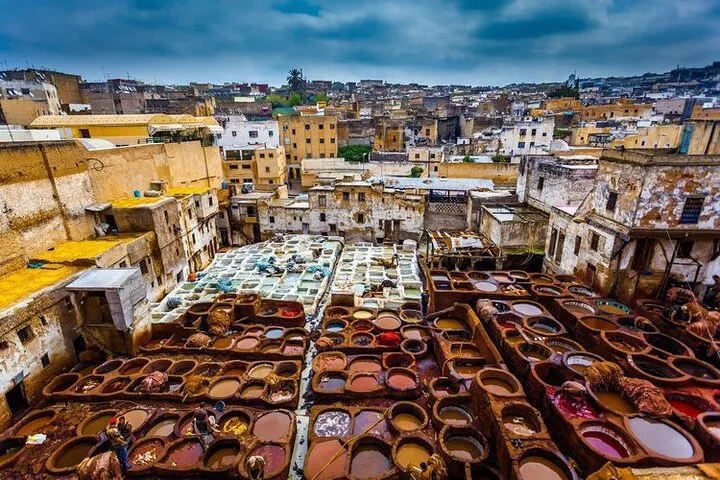
Explore Fes with a licensed local guide. A useful route may include Bab Bou Jeloud, medersa architecture where open to visitors, Nejjarine, metal and textile quarters, the tanneries, food markets, and viewpoints. The medina is lived-in, not a stage set, so build in time for workshops and conversation instead of racing between landmarks.
Wear supportive shoes and carry only a small day bag. Vehicle access is limited in Fes el-Bali. Your guide should shape the walk around mobility, heat, prayer times, opening conditions, and the crafts that interest you.
Day 5: Fes through the Middle Atlas to Merzouga
This is one of the longest days. The value is in the changing geography: Middle Atlas towns, cedar country near Azrou, high plains around Midelt, the Ziz Valley, palm oases, and increasingly arid landscapes approaching Merzouga. Stops should break the drive without making arrival so late that the final desert approach happens in darkness.
Sleep at a hotel or kasbah near the dunes rather than forcing the camp transfer onto the end of a full road day. This creates a calmer second desert day and gives weather or traffic delays some breathing room.
Day 6: Merzouga region and desert camp
A second Sahara night is the difference between reaching the dunes and experiencing the region. Use the morning for a 4x4 circuit, local village visit, fossil landscapes, seasonal lake area when conditions permit, or quiet time near Erg Chebbi. Confirm which activities are included and which are optional.
Later, transfer toward camp by camel, 4x4, or a combination according to comfort and weather. Ask in advance about tent category, private bathroom, bedding, dinner, charging, luggage transfer, and the walking surface. Read the Morocco desert tour packing list before deciding what belongs in the small overnight bag.

Day 7: Merzouga to Todra Gorge and Dades Valley
After sunrise and breakfast, leave the Sahara toward Tinghir and Todra Gorge. Walk where conditions and time allow, then continue into the Dades Valley. The road reveals oasis agriculture, rock formations, villages, and fortified architecture. It is a travel day, but a visually rich one.
Choose an overnight with a valley outlook or a property close to the route for the next morning. Arriving before dark makes the setting part of the stay instead of merely a bed between drives.
Day 8: Dades, Ouarzazate, and Ait Ben Haddou
Travel through the Valley of Roses and the Road of a Thousand Kasbahs toward Ouarzazate. Film studios are optional; they should not replace the architecture and landscape unless cinema is a major interest. Continue to the Ksar of Ait Ben Haddou, a UNESCO-listed fortified settlement built in earthen materials.
Staying near Ait Ben Haddou creates time for a late-afternoon or early-morning walk with softer light and fewer day visitors. Ouarzazate is more practical for travelers prioritizing hotel choice or an early onward departure.
Day 9: High Atlas crossing to Marrakech
Cross the High Atlas by the route available for current road and weather conditions. The mountain drive is not a short transfer. Leave space for viewpoints, a meal, and possible delays. Reach Marrakech with time to settle into the riad and take a first evening walk around Jemaa el-Fna or the surrounding souks.
Do not schedule a tightly timed international departure on the same day as the mountain crossing. The value of a private route is flexibility, not pretending geography is predictable.
Day 10: Marrakech or departure
If the flight leaves late, use the morning for a guided Marrakech visit focused on the medina, palaces, gardens, food, or design. If the flight is early, move the city tour to Day 9 and reduce stops on the Atlas crossing. Travelers with a full extra night should consider at least two nights in Marrakech.
Browse the matching 10-day private tour from Casablanca for route details, or compare all tours from Casablanca when your arrival and departure airports differ.
Is This 10-Day Morocco Itinerary Too Fast?
It is active but workable for travelers who want a broad first journey and accept several substantial drives. Days 5, 7, and 9 cover major distances. The road itself is part of the trip, but only when the vehicle is comfortable, the driver follows safe hours, and stops have a purpose.
This route is too fast for travelers who want long mornings, frequent hikes, remote photography, or several unstructured medina days. It may also be demanding for very young children, people prone to motion sickness, or anyone who finds daily packing tiring.
| Travel preference | Best adjustment |
|---|---|
| Less driving | Remove Chefchaouen or the Sahara rather than shortening every stop. |
| More desert time | Skip Chefchaouen and add a third southeast night. |
| More medina time | Add a day in Fes or Marrakech and use an 11- or 12-day route. |
| Family pace | Use two-night bases and reduce the number of one-night stays. |
| Seven-day limit | Read the 7-day Morocco itinerary and choose fewer regions. |
Where to Stay on a 10-Day Morocco Trip
Riads in the imperial cities
A medina riad offers atmosphere and personal service, but access may involve walking, stairs, and luggage handoff. Ask about room location, elevator access, heating or cooling, roof terraces, and the distance from the nearest vehicle point. In Marrakech, a property near the medina edge can make an early airport departure easier.
Desert hotel plus camp
Use one night at a hotel near Erg Chebbi and one at camp. This is more resilient than driving from Fes and immediately transferring into the dunes. Keep the main suitcase at the hotel or in the vehicle when appropriate, and carry a small overnight bag to camp.
Kasbah and valley stays
Dades and Ait Ben Haddou reward location. A simple property with a good valley setting may add more to the trip than a polished hotel beside a busy road. Confirm dinner availability because independent restaurant choice can be limited outside major cities.
Useful Variations for Different Flights
Round trip from Casablanca
Finish Day 9 in Marrakech, then use Day 10 for the direct transfer to Casablanca airport. Only do this when the flight time leaves a sensible safety margin. For an early flight, sleep near Casablanca on Day 9 and shorten Marrakech.
Start in Marrakech and finish in Fes
Reverse the southern half: Marrakech, Ait Ben Haddou, Dades, Merzouga, then Fes. Add Chefchaouen and Rabat only if the departure airport supports the northbound route. Review tours from Marrakech for southbound alternatives.
Skip Chefchaouen
Travel from Rabat through Meknes and Volubilis to Fes, then add the saved night to Marrakech, Fes, or the desert. This is the strongest adjustment for travelers who prefer depth over geographic range.
Add Essaouira
Ten days is not enough to add Essaouira without removing another major region. Extend to 12 days or replace Chefchaouen. The Atlantic coast works especially well when summer heat makes a cooler finish attractive. Check the best time to visit Morocco guide before choosing.
10-Day Morocco Planning Checklist
- Confirm arrival and departure airports before fixing the route
- Protect a full day for the Fes medina
- Use two nights around Merzouga, not one rushed arrival
- Ask for estimated road time on every day
- Confirm camp bathroom, bedding, luggage, and transfer details
- Choose riads based on access as well as appearance
- Check the season for mountain and desert conditions
- Leave a safe margin before international flights
A good itinerary is not a list of every famous place. It is a sequence in which each stop has enough time to matter. Explore all private Morocco tours, or use the trip-planning form to adapt this route to your dates and preferred pace.
10 Days in Morocco: Common Questions
Is 10 days enough for Morocco?
Ten days is enough to connect Morocco's imperial cities, the Rif Mountains, Erg Chebbi, kasbah country, and Marrakech, but only when the route moves in one direction and treats the long transfer days honestly.
What is a good 10 day Morocco itinerary for a first visit?
Begin in Casablanca, continue to Rabat and Chefchaouen, spend two nights in Fes, cross the Middle Atlas to Merzouga, sleep two nights around the Sahara, then travel through Todra, Dades, Ait Ben Haddou, and the High Atlas to finish in Marrakech. This plan uses nine hotel or camp nights and avoids returning over the same long roads.
How many nights should I spend in the Sahara?
Two nights around Merzouga. A second Sahara night is the difference between reaching the dunes and experiencing the region: it leaves room for the landscape, local communities, and a camp evening without attaching every experience to a single arrival deadline.
Can I do this route as a round trip from Casablanca?
Yes, but the final day needs to include the Marrakech-to-Casablanca transfer or an additional airport night. The route works best as an open-jaw journey: arrive through Casablanca and leave from Marrakech, or reverse it.
Is the 10 day Morocco route too fast?
It is active but workable for travelers who want a broad first journey and accept several substantial drives. Days 5, 7, and 9 cover major distances, so the vehicle, the driver, and the purpose of each stop matter.
Can Morocco Happiness Tours arrange this itinerary as a private tour?
Yes. We organize private tours anywhere in Morocco. Tell us your dates, your airports, and the pace you prefer, and we take care of the rest. You can also start from the 10-day private tour from Casablanca and adapt it. We are available 24/7.
Ready to travel this route? See the 10-day private tour from Casablanca, ask for a tailor-made Morocco tour, or send your dates through the contact page or on WhatsApp. We plan it with you and take care of the rest, 24 hours a day.
Sources and Editorial Checks
This guide was prepared from Morocco Happiness Tours' published routes and checked against the authoritative sources below on . Entry rules, transport schedules, weather, and public guidance can change; verify them again for your travel date.